



India’s startup story in 2026 is no longer defined only by unicorn valuations, headline funding rounds or the speed at which a company expands. It is increasingly about founders building businesses that solve complex problems, serve diverse markets and remain commercially resilient. From artificial intelligence and financial technology to consumer brands, mobility and healthcare, a new generation of entrepreneurs is influencing how India works, shops, travels and lives.
The scale of the ecosystem is significant. According to the Government of India, the country had more than 2.23 lakh DPIIT-recognised startups as of 31 March 2026, generating over 23.36 lakh direct jobs. More than 55,200 startups were recognised during FY 2025–26 alone. The government also reported that approximately 48% of recognised startups had at least one woman director or partner.
Yet scale brings a different set of challenges. Investors are becoming more selective, customers expect stronger products and founders are under increasing pressure to demonstrate sustainable business models. India’s startup ecosystem is entering a phase in which execution, commercial viability and long-term value creation matter as much as expansion.
Against this backdrop, the following founders offer a snapshot of the people and businesses shaping India’s entrepreneurial landscape. This is an editorial selection across sectors, not a ranking of personal wealth or company valuations.
The Founders Shaping India’s Startup Landscape
1. Deepinder Goyal — Eternal (Zomato)
Deepinder Goyal helped transform the way urban India discovers restaurants and orders food. What began as a restaurant information platform developed into Zomato, one of the country’s most recognisable consumer technology businesses. Its evolution into Eternal reflects a wider ambition across food delivery and quick commerce, including the Blinkit business.
Goyal’s entrepreneurial journey highlights the importance of understanding everyday consumer behaviour and building the operational infrastructure needed to serve it at scale. Food delivery is not simply a technology product; it depends on logistics, restaurant partnerships, customer experience and reliability.

2. Falguni Nayar — Nykaa
Falguni Nayar founded Nykaa in 2012 after a career in investment banking, building a beauty and lifestyle business around a more organised online shopping experience. The company helped bring together product discovery, brand access, content and commerce in a category where trust and authenticity are particularly important.
Nykaa’s growth illustrates the role of founder-led consumer insight. Its proposition extended beyond selling beauty products to helping customers understand them, compare them and discover new brands. The business has since expanded into physical retail and additional lifestyle categories.

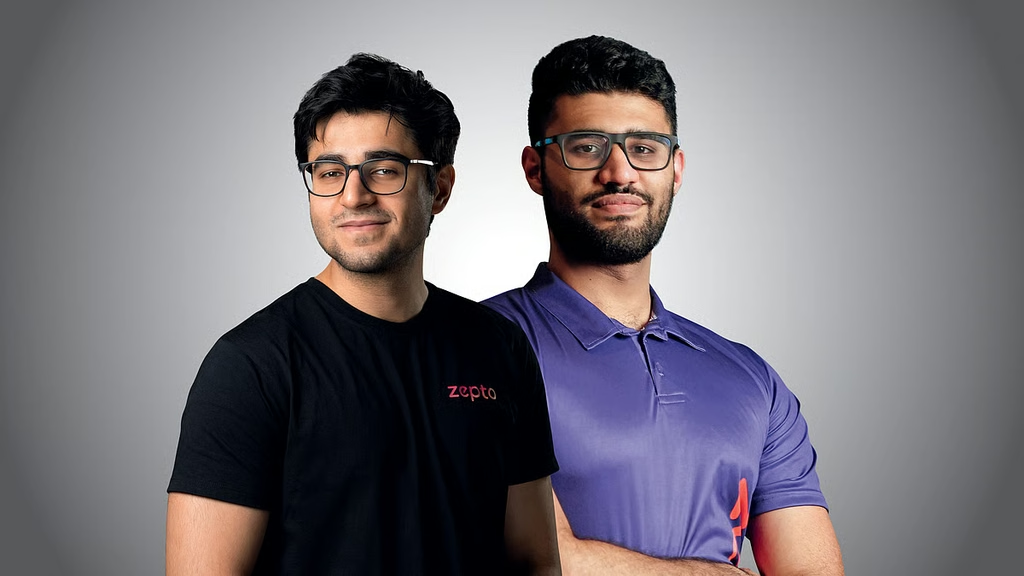
3. Aadit Palicha and Kaivalya Vohra — Zepto
Aadit Palicha and Kaivalya Vohra co-founded Zepto in 2021 and became prominent figures in India’s quick-commerce sector. Their business model is built around proximity-led fulfilment, technology and a dense network of delivery infrastructure.
Zepto’s journey demonstrates how a young company can influence consumer expectations around convenience and delivery speed. It also highlights the complexity behind quick commerce: inventory management, dark-store operations, procurement, delivery costs and the economics of serving individual neighbourhoods.
4. Nithin and Nikhil Kamath — Zerodha
The Kamath brothers built Zerodha into a major Indian stockbroking platform with a technology-led, low-cost approach. Nithin Kamath has been central to the company’s operating philosophy, while Nikhil Kamath has developed a broader public presence through investing and conversations around business and entrepreneurship.
Zerodha’s journey is notable for its emphasis on disciplined growth and a business model that did not depend on conventional venture-capital funding. It offers an alternative to the high-spending expansion strategy often associated with technology startups.

5. Ritesh Agarwal — OYO
Ritesh Agarwal founded OYO with the ambition of bringing greater consistency and standardisation to a fragmented hospitality market. The company built a network of branded accommodation by working with independent hotel owners and using technology and operating systems to improve the customer experience.
OYO’s journey reflects both the opportunity and difficulty of building a technology-enabled business in a traditional, service-heavy industry. Its story is particularly relevant to India’s travel and hospitality economy, where customer trust and consistent quality remain important challenges.

6. Bhavish Aggarwal — Ola and Krutrim
Bhavish Aggarwal first became known for building Ola into a major mobility platform. His entrepreneurial interests have since extended into electric mobility and artificial intelligence through businesses including Ola Electric and Krutrim.
The combination of mobility, manufacturing and AI represents a wider ambition among Indian founders to build technology and infrastructure capabilities within the country. These are capital-intensive sectors in which product development, supply chains and long-term execution matter as much as market visibility.

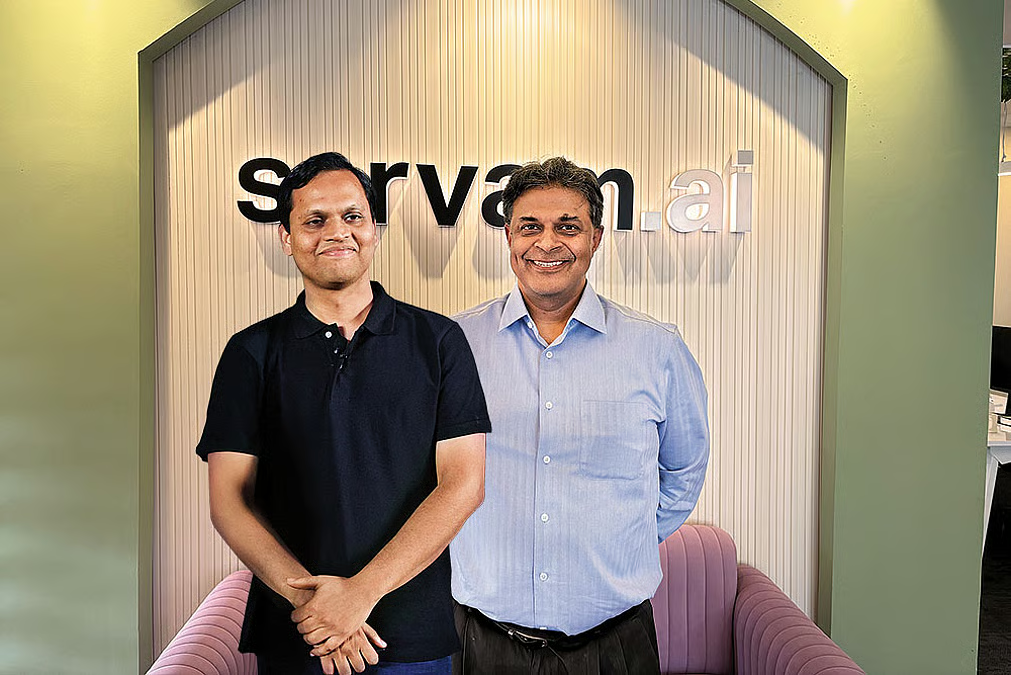
7. Vivek Raghavan and Pratyush Kumar — Sarvam AI
Sarvam AI, founded by Vivek Raghavan and Pratyush Kumar in 2023, is among the Indian ventures working on foundational artificial intelligence models and tools. Its focus includes building AI capabilities with an emphasis on Indian languages and local use cases.
The founders represent a growing cohort working on deep technology rather than only consumer-facing applications. Their challenge is to develop models that are technically competitive while making them useful, affordable and scalable for businesses and individuals in India.
8. Tarun Mehta and Swapnil Jain — Ather Energy
Tarun Mehta and Swapnil Jain co-founded Ather Energy, helping establish a technology-focused approach to electric two-wheelers in India. The company has worked across vehicle engineering, battery systems, software and charging infrastructure.
Ather’s journey demonstrates that India’s electric mobility transition requires more than launching an electric vehicle. It involves building a connected ecosystem that supports ownership, charging, service and product reliability.

9. Ghazal Alagh and Varun Alagh — Honasa Consumer
Ghazal and Varun Alagh co-founded Honasa Consumer, the parent company of Mamaearth. Their business emerged from an opportunity in the personal-care market, where consumers were becoming more attentive to ingredients, product positioning and brand communication.
The company’s journey reflects the influence of digital-first consumer brands in India. Social media, direct customer engagement and online distribution have created new routes to market, while the challenge for established digital brands is to sustain trust, repeat purchases and differentiation as competition increases.

10. Vidit Aatrey and Sanjeev Barnwal — Meesho
Vidit Aatrey and Sanjeev Barnwal co-founded Meesho with a model designed to widen access to online commerce. By focusing on value-conscious consumers and smaller sellers, the company helped bring a broader range of businesses into India’s digital retail ecosystem.
Meesho’s story is significant because it looks beyond premium urban consumers. Its approach reflects the commercial potential of smaller cities and towns, where affordability, product variety and accessible digital tools can influence how people participate in online markets.

The Emerging Generation: New Categories, New Ambitions
Alongside established names, newer founders are building businesses in areas that may become increasingly important to India’s economy.
Vivek Raghavan and Pratyush Kumar at Sarvam AI represent the ambition around Indian-language AI and foundational technology. Mansi Baranwal, founder of Troovy, is building a child-focused food brand around more considered packaged nutrition. Vandana Jain of Lucira Jewelry is working in the lab-grown diamond and contemporary luxury segment. Saurabh Gupta of Shoegr is developing a specialist consumer category around footwear and sneaker care.
These ventures are at different stages of maturity, and their commercial trajectories should not be treated as equivalent. However, they demonstrate the range of problems that founders are choosing to address: from technology infrastructure and food innovation to changing consumer preferences and specialised retail.
What Is Changing for India’s Founders in 2026?
A Stronger Focus on Sustainable Growth
The funding environment has become more disciplined. Investors are increasingly prioritising customer validation, monetisation and commercial readiness. Founders are being judged not only on how quickly they acquire users, but on whether their businesses can retain customers and generate sustainable returns.
Artificial Intelligence and Deep Technology Move Forward
AI is becoming a major area of entrepreneurial activity, particularly in enterprise software, cybersecurity, industrial applications and language technology. Building a defensible product requires research, specialised talent, computing infrastructure and a clear route to commercial adoption.
Entrepreneurship Spreads Beyond Major Metros
Bengaluru, Delhi NCR and Mumbai remain important startup centres, but the ecosystem is not confined to these cities. Around half of DPIIT-recognised startups have originated in Tier-II and Tier-III cities, reflecting the growing geographical reach of entrepreneurship. This wider participation can bring new consumer insights, local employment and solutions designed for markets beyond India’s largest urban centres.
More Attention to Women-Led Entrepreneurship
The government’s reported figure of approximately 48% of recognised startups having at least one woman director or partner is an important indicator of participation. It should not be interpreted as meaning that 48% are women-founded businesses, but it does point to the presence of women in startup leadership and ownership structures. Continued access to capital, networks, mentorship and senior leadership opportunities will be important to translating participation into greater representation among founders.
The Next Chapter of Indian Entrepreneurship
India’s startup founders are building across an unusually broad range of industries. Some are reshaping familiar consumer habits; others are developing technology, manufacturing capabilities and services that may influence the country’s long-term competitiveness. Their journeys differ in scale, funding, maturity and market impact, but they share a common requirement: the ability to turn an idea into a business that delivers value consistently.
The defining founder of 2026 may not necessarily be the one with the largest funding announcement or the fastest expansion plan. It may be the entrepreneur who understands a real problem, builds a strong team, earns customer trust and creates a business capable of lasting beyond the next market cycle. That is the measure by which India’s next generation of startup leaders will ultimately be judged.
Editorial note: This is a curated guide, not an exhaustive directory or an investment recommendation. Founder profiles reflect publicly reported company histories and sector activity. Verify current leadership roles, company developments and statistics before publication.


