
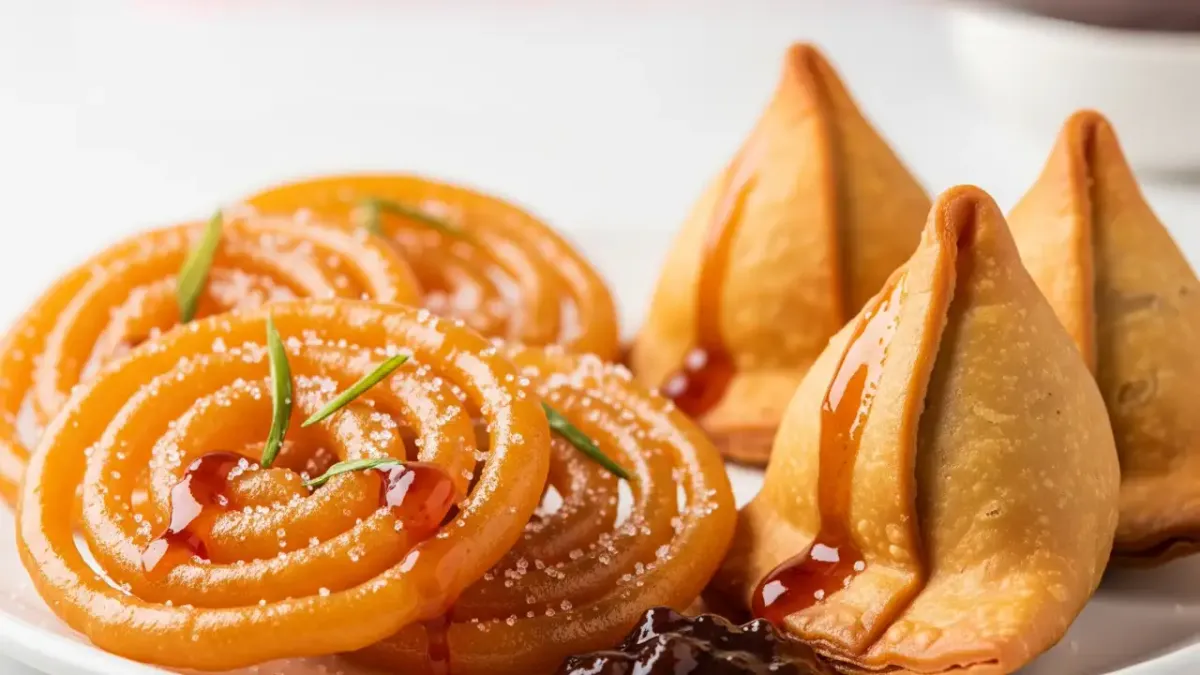

The Indian government has decided that popular snacks like samosas, jalebis, pakoras, vada pav, and chai biscuits will soon carry clear health warnings. These warnings will tell people that these foods have a lot of oil, sugar, and bad fats, which can lead to serious health problems.
Where will it start?
This plan will first begin in Nagpur. The All India Institute of Medical Sciences (AIIMS) in Nagpur will be the first place to try it. Cafeterias and public eating areas there will display big, easy-to-read warning boards next to food counters.
Why is this being done?
India is facing a growing health crisis. More and more people are dealing with obesity, diabetes, high blood pressure, and heart disease. One of the main reasons is eating too many deep-fried and sweet snacks. A study in The Lancet journal says that by 2050, around 440 million Indians may become overweight or obese.
What will be different?
At places like AIIMS Nagpur, people will see warning posters next to food stalls, clear information about sugar, fat, and trans fat content in the foods, and messages explaining the long-term health risks of eating these snacks often. The aim is to help people make healthier food choices.
These warnings are designed to be direct and impactful, much like the alerts seen on cigarette packs. However, the government has made it clear that this is not a ban on traditional foods. Samosas, jalebis, and other snacks will still be available, but people will now be more informed about what they are eating.
The idea is to promote moderation rather than restriction, encouraging people to enjoy these foods in limited amounts. Looking ahead, this warning-label campaign is expected to expand to other cities and institutions in the coming months. Authorities hope that these clear warnings will act as a wake-up call and inspire people to adopt healthier, more balanced diets. By simply glancing at a cafeteria wall, they hope individuals will start making more mindful food choices.
var fbKey = ‘174123585737091’;
(function(d, s, id){
var js, fjs = d.getElementsByTagName(s)[0];
if (d.getElementById(id)) {return;}
js = d.createElement(s); js.id = id;
js.defer = true;
js.src = `
fjs.parentNode.insertBefore(js, fjs);
}(document, ‘script’, ‘facebook-jssdk’));
var fbKey = ‘174123585737091’;
(function(d, s, id){
var js, fjs = d.getElementsByTagName(s)[0];
if (d.getElementById(id)) {return;}
js = d.createElement(s); js.id = id;
js.defer = true;
js.src = `
fjs.parentNode.insertBefore(js, fjs);
}(document, ‘script’, ‘facebook-jssdk’));