

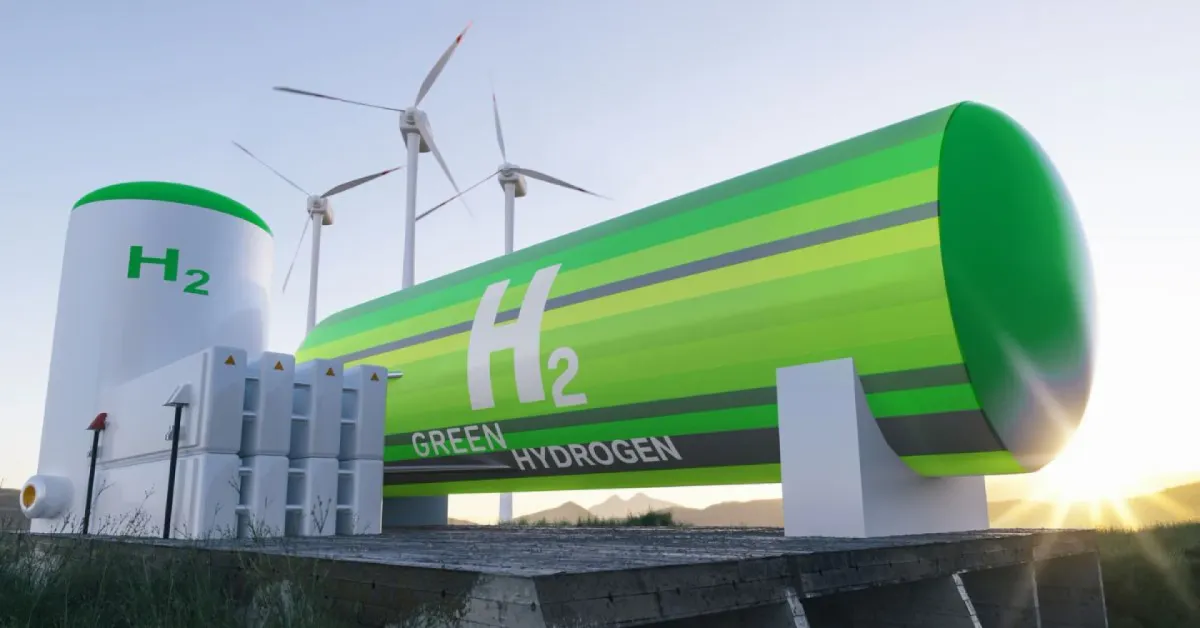

In an exciting breakthrough, scientists at the Centre for Nano and Soft Matter Sciences (CeNS) in Bengaluru have developed a special device that can turn sunlight into green hydrogen. This clean hydrogen can be used to power homes, vehicles, and even large industries, helping us move away from fossil fuels and reduce pollution.
Led by Dr Ashutosh K Singh, the team created a new kind of silicon-based photoanode with a smart design that uses only solar energy and easily available materials to split water into hydrogen and oxygen. They used a technique called magnetron sputtering, which is precise and already ready for large-scale industrial use. Thanks to this careful engineering, the device absorbs light better, moves charges more quickly, and loses less energy, making the process of producing hydrogen much more efficient.
The device has some impressive features. It achieved a high surface photovoltage of 600 mV and started working at a very low voltage. It was also able to run continuously for over 10 hours in alkaline conditions, with only a small drop in performance. Most importantly, it worked well even when scaled up to a larger size, showing that this technology can be used on a big scale in the future.
This invention fits perfectly with India’s goal to become more energy independent and achieve carbon neutrality under the National Green Hydrogen Mission. According to Dr Singh, by carefully choosing the right materials and combining them in a smart way, the team has created a device that is not only highly efficient but also easy to produce in large quantities.
Their research has been published in the Journal of Materials Chemistry A, and the scientists believe this is just the beginning. With further improvements, this technology could one day power entire homes and factories, all using clean energy from the sun.
var fbKey = ‘174123585737091’;
(function(d, s, id){
var js, fjs = d.getElementsByTagName(s)[0];
if (d.getElementById(id)) {return;}
js = d.createElement(s); js.id = id;
js.defer = true;
js.src = `
fjs.parentNode.insertBefore(js, fjs);
}(document, ‘script’, ‘facebook-jssdk’));
var fbKey = ‘174123585737091’;
(function(d, s, id){
var js, fjs = d.getElementsByTagName(s)[0];
if (d.getElementById(id)) {return;}
js = d.createElement(s); js.id = id;
js.defer = true;
js.src = `
fjs.parentNode.insertBefore(js, fjs);
}(document, ‘script’, ‘facebook-jssdk’));